



VAAL TRIANGLE — A Vaal Triangle-based investigative journalist has formally reported an attempt to silence press coverage of an ongoing murder investigation to the Press Council of South Africa, after receiving what constitutional law experts describe as a legally invalid "Media Non-Disclosure & Non-Publication Agreement."
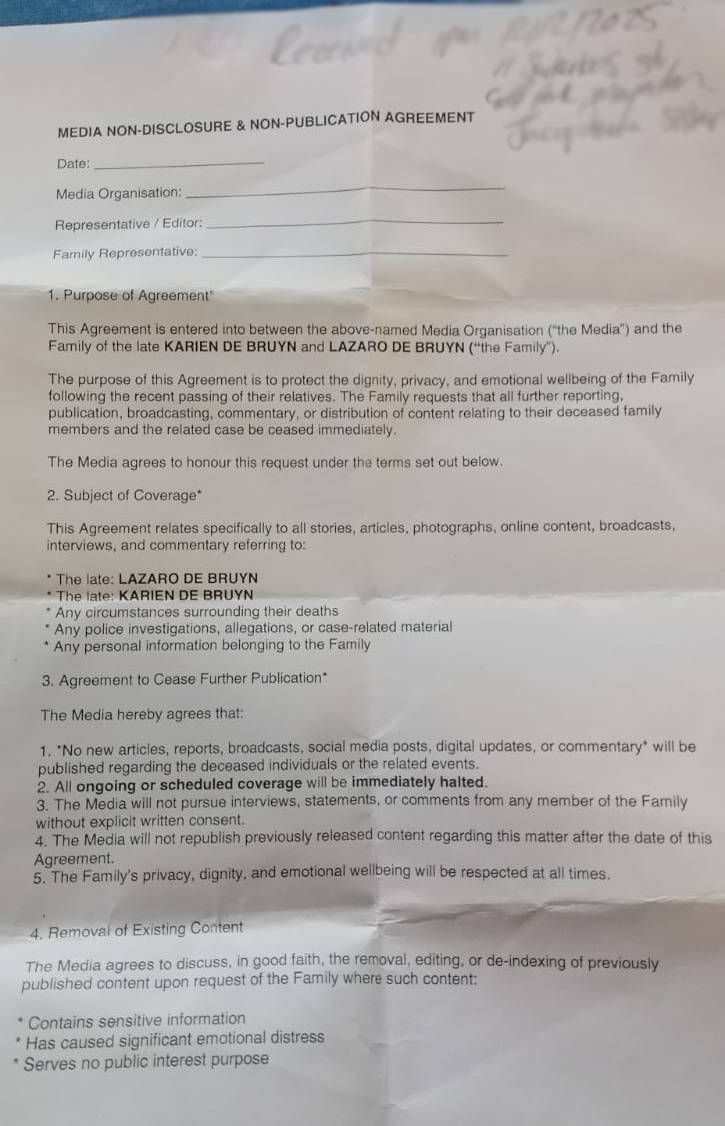
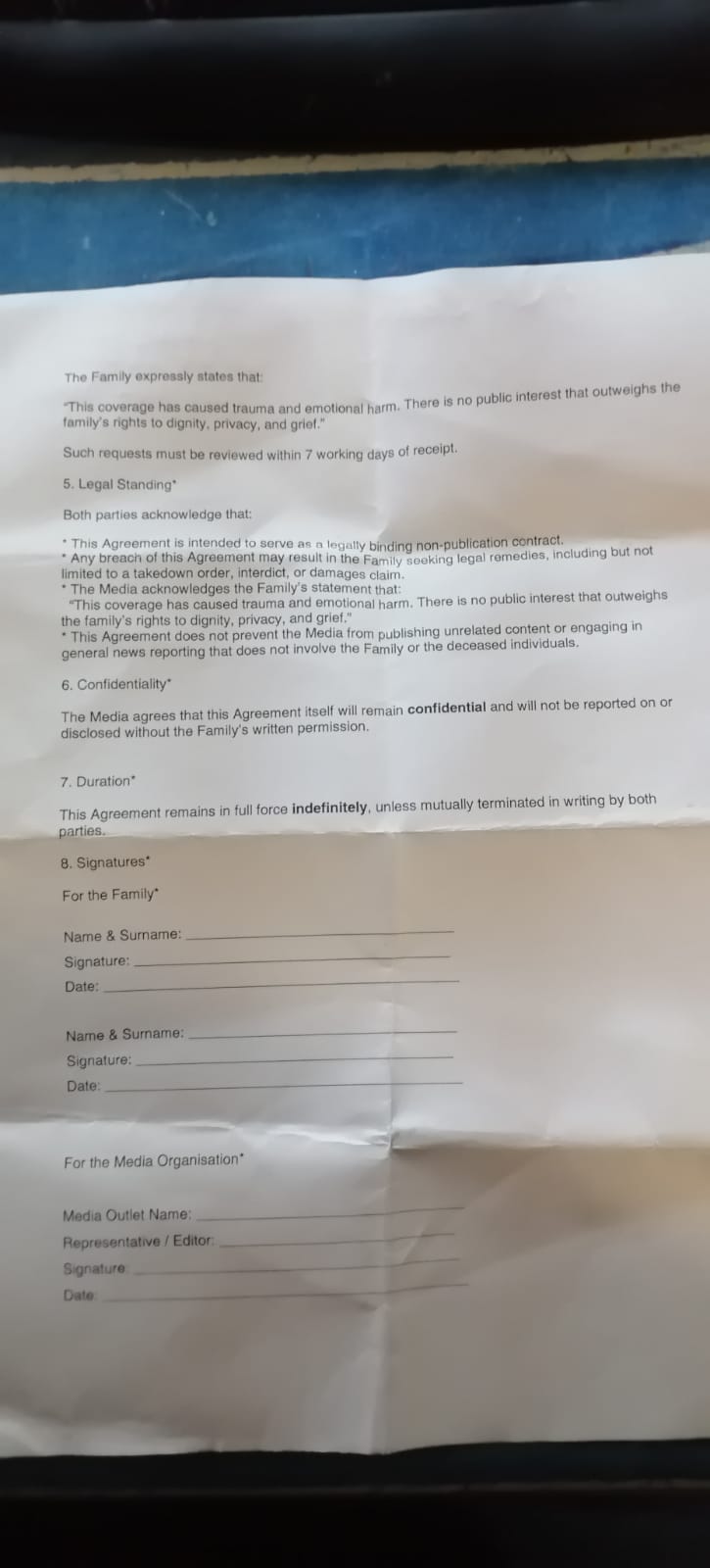
The document, delivered this week to Project CBNews founder Carlett Badenhorst, demands immediate cessation of all reporting on a case currently under investigation by the South African Police Service. Multiple media law specialists consulted by this publication were unanimous in their assessment: the document has no legal validity under South African law.
"This is a textbook example of why we have constitutional protections for the press," said a media law expert who reviewed the document on condition of anonymity. "Private parties cannot simply draft agreements to silence journalists from reporting on matters of public interest."
Document Demands Unprecedented Restrictions
The purported agreement makes several extraordinary demands, including:
- Immediate cessation of all coverage including articles, broadcasts, and social media posts
- Cancellation of scheduled coverage
- Prohibition on interviewing witnesses without written consent from unspecified parties
- Removal of previously published content deemed "sensitive"
- Permanent confidentiality maintained "indefinitely"
Constitutional Law Experts Reject Validity
Media law specialists contacted by Project CBNews emphasized that such documents directly contradict South African constitutional protections.
Section 16 of the Constitution explicitly protects freedom of expression, freedom of the press and other media, and freedom to receive or impart information or ideas.
"These fundamental rights cannot be waived through private agreements, particularly when reporting on matters of legitimate public interest," explained a constitutional law specialist who reviewed the document. "The framers of our Constitution understood that a free press is the foundation of democracy."
South African courts have consistently held that public interest outweighs privacy claims when covering criminal investigations, matters involving public officials, issues of public safety, and allegations of wrongdoing.
The Public Interest Standard
While constitutional rights can be limited under Section 36 of the Constitution, any limitation must be "reasonable and justifiable in an open and democratic society" through law of general application.
"A private document demanding journalists stop reporting on a criminal investigation would never pass this test," said a media law practitioner consulted on the matter. "Murder investigations are inherently matters of public interest. That's established law in South Africa."
Key public interest considerations in criminal reporting include ensuring proper administration of justice, holding authorities accountable, protecting public safety, ensuring equal application of the law, and encouraging witnesses to come forward.
Press Code Requirements
The Press Council of South Africa's Press Code explicitly requires journalists to report on matters of public interest, including exposing or detecting crime, protecting public health and safety, preventing the public from being misled, and revealing significant anti-social behavior.
"The Press Code requires balance and fairness, but it does not require silence," said a media ethics expert familiar with the case. "The suggestion that coverage should stop because it causes discomfort is fundamentally at odds with ethical journalism."
Potential Legal Implications
Several legal experts raised concerns that the document itself may constitute criminal conduct, including possible obstruction of justice.
"If this document is designed to prevent media coverage of a criminal investigation, that could constitute obstruction of justice," explained one criminal law practitioner who reviewed the materials. "Media coverage often plays a crucial role in investigations by encouraging witnesses to come forward and ensuring accountability."
Depending on delivery methods and accompanying communications, the document could potentially constitute intimidation by attempting to coerce a journalist into not exercising lawful rights, according to legal experts.
Court Process Required for Publication Restrictions
Constitutional lawyers emphasized that private parties cannot simply issue gag orders to the media.
"If someone genuinely believes they have grounds to prevent publication, they must approach a court and seek an interdict," explained one constitutional lawyer. "The legal process for obtaining such interdicts is rigorous and requires proving publication would cause irreparable harm that cannot be remedied after publication, that harm outweighs public interest, and no other reasonable alternative exists."
Such interdicts are rarely granted, lawyers noted, because courts recognize the fundamental importance of press freedom. The threshold is deliberately very high.
Press Freedom Organizations Respond
The incident has drawn attention from press freedom organizations in South Africa.
"Documents like this, even though legally meaningless, can have a chilling effect on press freedom," warned one media lawyer affiliated with a press freedom organization. "Journalists might be intimidated into silence even though they have every legal right to continue reporting."
Press coverage of criminal investigations serves crucial functions including encouraging witnesses to come forward, placing pressure on authorities to act, revealing failures in investigations, and ensuring equal application of the law.
Journalist's Response and Next Steps
After consultation with constitutional law experts, media lawyers, and press freedom organizations, the journalist has formally notified the Press Council of South Africa and plans to continue reporting on the matter.
"I have a constitutional duty to report on matters of public interest accurately and responsibly," Badenhorst stated. "Invalid legal agreements cannot supersede constitutional protections for press freedom, nor can they prevent the public from accessing information they have a right to know."
The journalist emphasized adherence to the Press Code throughout the reporting process, including verification of facts, attempts to obtain comment from all relevant parties, and focus on legitimate public interest.
Broader Press Freedom Context
Media freedom advocates note this incident fits a pattern of legal intimidation tactics increasingly used against investigative journalists in South Africa, including spurious defamation claims, strategic lawsuits designed to drain resources (SLAPP suits), and threats intended to create a chilling effect on reporting.
According to the South African National Editors' Forum (SANEF), such tactics have become more common as investigative journalism increasingly exposes wrongdoing and holds powerful interests accountable.
Legal Analysis Summary
Constitutional and media law experts consulted for this article were unanimous in their conclusions:
- The document has no legal force or validity under South African law
- It violates constitutional protections for press freedom
- It attempts to override fundamental rights that cannot be waived through private agreements
- Criminal investigations are inherently matters of public interest
- Journalists cannot be compelled to sign away constitutional rights
- Only courts can restrict publication, and only under strict legal tests
Transparency and Accountability
This publication believes in transparency about press freedom challenges facing journalists. By reporting this incident publicly, Project CBNews aims to document attempts to suppress public interest journalism, uphold constitutional protections for press freedom, and inform the public about threats to their right to information.
The Press Council is expected to review the matter and may issue guidance or take additional steps to address the attempted press freedom violation.
Project CBNews will continue exercising its constitutional rights and professional duties to report truthfully on matters of public interest, while maintaining adherence to the Press Code and ethical journalism standards.
Editor's Note: Project CBNews is committed to responsible investigative journalism that serves the public interest while respecting legal and ethical boundaries. This article has been reviewed by independent media law specialists. We welcome feedback and take seriously our obligations under South African media law and the Press Code.
Resources for journalists facing similar challenges:
- SANEF: www.sanef.org.za | info@sanef.org.za
- Freedom of Expression Institute: www.fxi.org.za | info@fxi.org.za
- Press Council of SA: www.presscouncil.org.za