




Africa's Changemakers Take Centre Stage at High-Level Development Summit
More than 200 practitioners, founders, and community leaders gathered for a summit that did something unusual in development circles — it treated Africans as the people doing the work, not the people development happens to.

On Wednesday in Nairobi, more than 200 people gathered for a summit that did something unusual in development circles — it treated Africans as the people doing the work, not the people development happens to.
The Global NGO Stakeholders Summit brought together entrepreneurs, civil society leaders, and practitioners to talk seriously about what building sustainable organisations on this continent actually looks like. Not in theory. In practice, with the structural weight that entails.
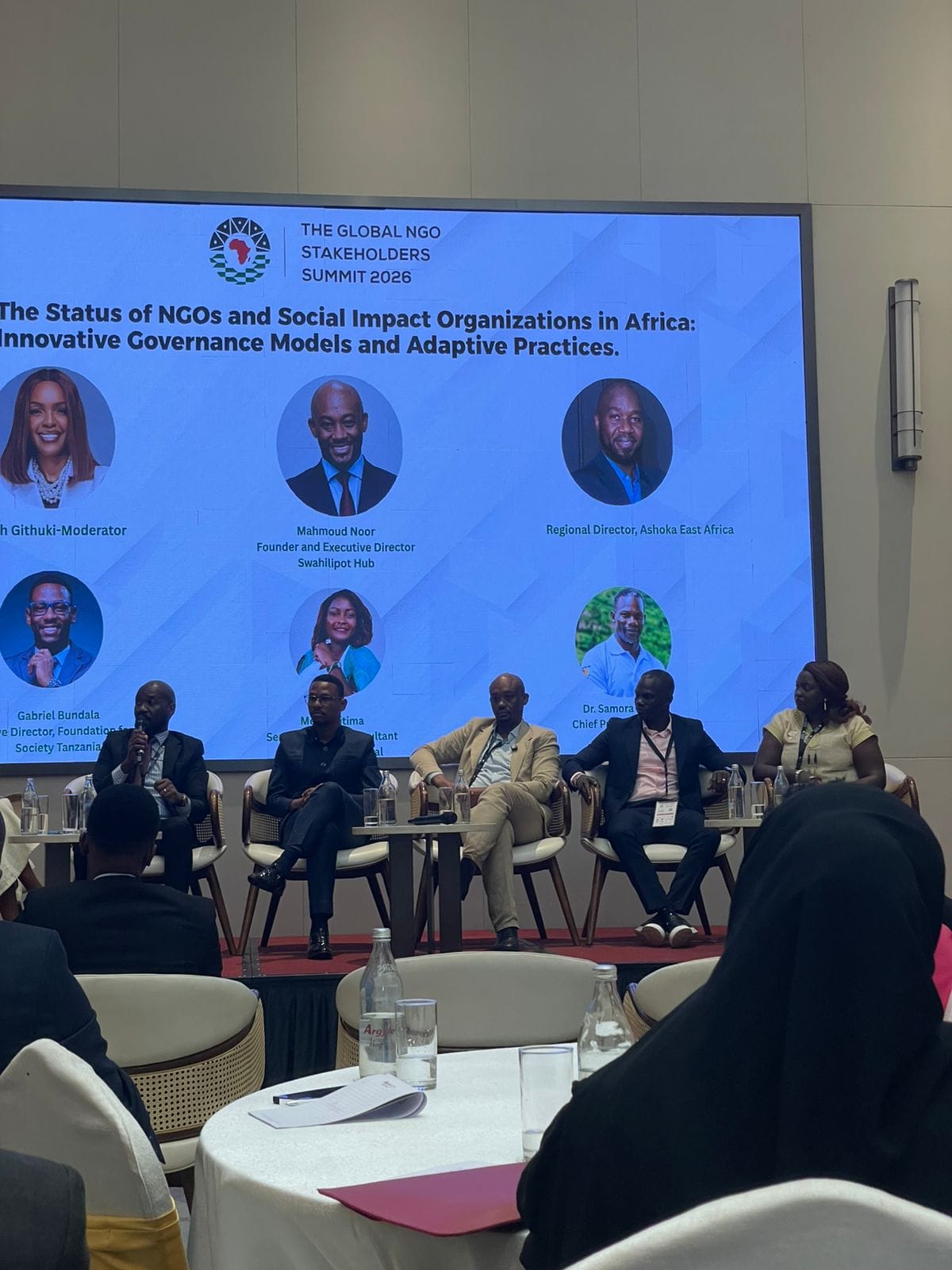
Mahmoud Noor, Founder and Executive Director of Swahilipot Hub, made the case for what youth empowerment is supposed to mean when it is done right — not motivational programming, but the deliberate construction of opportunity: technology access, leadership development, and the institutional credibility to open doors that remain closed to young people in most development conversations. His argument was simple enough to be dangerous: young people are not waiting to be included. They are already building. The question is whether existing institutions are structured to support that, or to absorb it.
"Africans are not merely participants in global development — they are contributors, innovators, and architects of solutions transforming communities across the world."
The Regional Director of Ashoka East Africa pressed the room harder, challenging the framing that communities across the continent require external solutions to internal problems. Social innovation that actually holds is rooted — built by the people most affected by a problem, with ownership that does not evaporate when the funding cycle ends. The pitch was not philosophical. It was operational: participation in development versus authorship of it produces structurally different outcomes.
Gabriel Bundala, Founder and Director of the Foundation for Civil Society Tanzania, made the governance argument. Civil society organisations across Africa are carrying real weight with chronically thin resources. The sustainability conversation is not about charity models — it is about building institutions with the structural backbone to outlast their founders, their funders, and the appetite of international partners who move on when the narrative shifts.
Beyond the sessions, the summit functioned as what summits rarely achieve: a genuine exchange among people with enough shared context to say what they actually mean. The networking was dense. The knowledge transfer was lateral — practitioner to practitioner, not expert to beneficiary. That distinction mattered, and people in the room knew it.
The closing reflected something close to accountability rather than optimism. Not the polished send-off that tends to mark the end of these gatherings, but a collective recognition that the people in that room were the ones positioned to move something, and that positioning carries obligation. That, more than any keynote, was the argument the summit made for itself.